A theme park robot can earn its keep without replacing a ride operator. It can carry supplies, guide guests, inspect equipment, or give visitors a reason to spend more time in one area.
The business case depends on the task, the operating hours, and the cost of keeping the robot safe around people.
Quick read:
- Parks can sell robot-led shows, tours, and character encounters.
- Behind the scenes, robots may cut inspection work and move stock across large sites.
- The hard parts are safety, maintenance, weather, and proving that guests return for the service.
Guest services create direct sales
The clearest income stream is a robot that guests pay to see or use. A mobile character could lead a short tour, answer questions about a themed area, or appear in a timed performance.
A robotic arm could run a repeatable demonstration inside an attraction shop. Each activity needs a clear price or a clear effect on spending. A paid robot tour has a direct ticket value.
A free character encounter may support food, merchandise, or longer visits, but the park would need to measure those sales rather than assume them.
The design also changes the cost. A robot that follows a fixed route needs less sensing than one that moves through a crowd. A stage robot can work in a controlled area, where staff can keep people outside its reach. That usually makes the first business case easier to test.
Parks can also rent robots for seasonal events. A machine used for a winter show, a film promotion, or a limited exhibition may earn money without becoming part of the park's daily operation. The contract would need to cover transport, setup, repairs, and staff training.
Robots can cut work behind the scenes
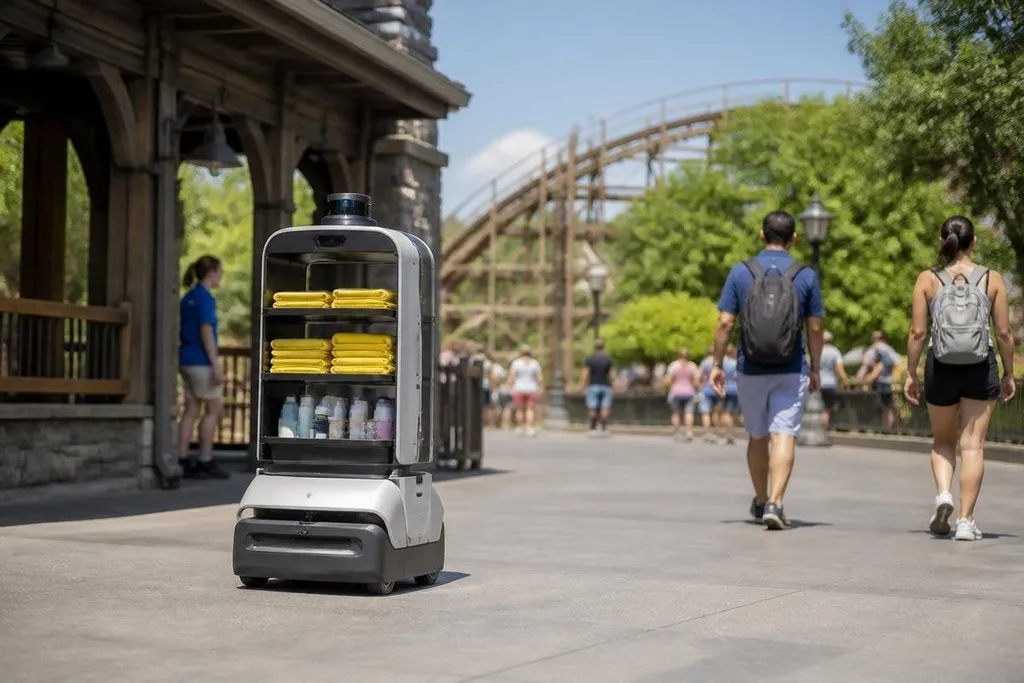
Large parks move food, cleaning supplies, spare parts, and waste across long routes. An autonomous mobile robot, or AMR, uses sensors and maps to move without a person driving it. It could carry a sealed load between a service building and a kitchen during set delivery windows.
That use does not need a robot with a face or a voice. A cart with obstacle detection may fit the job better. The park can compare its purchase and maintenance cost with the hours staff spend on repeated transport, while still keeping people in charge of loading and exceptions.
Inspection offers another route. Inspection robots carrying cameras could check fences, empty paths, roof areas, or ride structures after closing. The system would record images for a technician to review. It would not remove the need for a qualified inspection, but it could give that person a regular record and reduce time spent walking long routes.
The business case depends on what those images change for staff. Dated theme park robotics reporting from Robot24.com can help park operators compare a machine's stated task with the safety checks and service work already in place.
The hard limits are part of the price
Theme parks are rough places for machines. Rain, dust, food spills, heat, uneven paths, and thousands of daily contacts can shorten service life. A robot that works indoors may need new seals, charging points, and cleaning steps before it can run outside.
Crowds add another problem. A robot must stop safely when a child steps into its path, when a guest touches an arm, or when a group blocks a route for a photo. Staff still need a way to pause the machine, move it, and report faults.
The park also needs a plan for quiet periods. If a robot only earns money during a short show, its idle time becomes part of the cost. A machine that can move stock after closing may have a better use across the day, even if guests never see it.
I’d start with a fixed-route service robot or a controlled show, then measure the result before buying a more complex machine.
A buyer's checklist
Before a park funds a robot project, the team should check:
- Task: Name the work, route, hours, and human handoffs.
- Income: Set a ticket, rental fee, or sales measure tied to the robot.
- Safety: Define stopping zones, staff controls, guest distance, and fault handling.
- Site: Test rain, heat, slopes, doors, floor changes, and network coverage.
- Upkeep: Price charging, cleaning, spare parts, software support, and repairs.
- Proof: Run a limited trial with a fixed start date and a written pass rule.
That last point keeps a good demo from becoming an open-ended purchase. The robot should earn a second phase through measured use, not through a polished video.
Theme park robotics will make the most sense where a machine repeats a costly task or creates a paid reason to visit. The first question for any park is plain: can this robot earn or save more than its staff, service, and safety costs within the hours it can actually run?